BullNet.ai — Private AI Offices
Your business.
Your data.
Your private AI office.
Built to suit. Operated with purpose.
BullNet builds private AI offices for businesses that depend on real estate, equipment, and informed decisions.
We bring together specialized AI agents, business data, and private computing infrastructure to help you understand your operations, evaluate opportunities, and make better-informed decisions.
Your intelligence stays under your control. Your decisions stay yours.
Founded on 30 years of commercial real estate transaction experience.
The latest readDoes It Pencil?Drop 002
570 Units. A 7% Cap. Does It Pencil?
A 570-apartment Class B property is 75% occupied. At an assumed 7% cap rate, the math gives one figure at today’s occupancy and a higher one at 92%. Every number here is a fictional teaching assumption.
02 What BullNet does
We don't list the asset.
We build the intelligence behind it.
A broker stands in the middle, between a buyer and a seller. BullNet stands in the middle too: between a business and the AI it needs. We are a service provider. We custom-build the agents, fit them into how the company already works, and stay to manage, fix and adjust them. Bricks and mortar are not our business, but after thirty years of transactions we know how that business runs.
In a net lease, everything rides on the credit of the tenant. In an AI office, everything rides on the credit of the builder.
We built it. We run it, on compute we own or on a Node in your building. We have skin in the game, and we stay to back it up.
| Compared with | What they provide | What BullNet provides |
|---|---|---|
| A brokerage | Lists, markets and sells property for a commission. | No listings and no property sales through BullNet. We build the analytical systems a principal uses to evaluate a decision. |
| A hyperscale cloud | General-purpose compute rented by the hour, shared across every industry. | Privately controlled bare-metal compute sized for the work, with local model inference and the option of a Node on your site. |
| A general AI model on its own | Strong, and the same for every company. It does not know your business, and you take its answers on trust. | We start from strong models, then tune them to your work, fit them into your systems, test what they produce and keep adjusting. Change orders never stop, so neither do we. |
| A loan broker | Shops your paperwork to lenders for a commission. | We pencil the deal first, then introduce lenders where they fit. BullNet is not a lender. A lender may pay us a fee when a financing closes, and we tell you when that applies. |
03 The problem
The data is confidential.
The decision is consequential.
A company that runs a warehouse, a yard or a fleet has real operations, years of records and nobody on staff to put AI to work on them.
- P-01
Fragmented documents
Leases, equipment titles, maintenance logs, invoices and insurance certificates sit in separate folders, inboxes and filing cabinets.
- P-02
External AI exposure
Pasting a customer contract or your financials into a public assistant may breach the agreement that came with them.
- P-03
Smart, but not yours
A general assistant is strong and still does not know your yard, your lanes or your lender. It answers anyway.
- P-04
Unverified model outputs
A language model states a payment or a valuation with confidence. Confidence is not a calculation.
- P-05
The back office eats the week
Quotes, billing, renewals, compliance paperwork and reports take the hours you would rather spend running the business.
- P-06
Knowledge that walks out the door
What the company has learned lives in people's heads and leaves when they do.
BullNet takes that off your plate: one agent per need, built inside a boundary you approve, with every figure traceable to a source or a test and a person signing off.
04 The Private AI Office
Your people. Your agents.
One private office.

The BullNet Private AI Office gives your team one place to work with the AI agents built for your business.
Ask questions, organize projects, prepare reports, and review the work. Each agent has a defined responsibility and access to information you authorize.
BullNet builds the environment, connects the right computing resources, and stays to operate and improve it.
The agents do the legwork. Your people make the calls.
The office is what you get. Everything else is how we deliver it.
02 What you receive
Five things, in one office.
A private workspace
Your team’s conversations, projects and requests in one place, on a desk or a phone.
Agents built for your work
Help with jobs you actually have, like chasing paperwork or preparing a report. Not a general chatbot.
Your information, organized
The documents and records you approve, findable in one place, so an answer can point back to where it came from.
A place the work runs
We bring the computing. It can be hosted privately by BullNet, sit in your building, or both. You do not need to buy hardware to start.
A team that stays
We build it, run it and adjust it as your business changes. You are not handed software and left alone.
03 A day in the office
Three moments in a contractor’s day.
The electrical contractor from our example, a few weeks into the 600-unit project. Each moment shows the question, the work an agent supports, the evidence or gaps, and who decides.
Owner7:00 AM
What needs me today?
- Operations desk is preparing: Gathering what the Hiring, Operations and Project desks have ready for approval.
Operations deskAgent
- Three items are waiting on your approval.
- A job offer for an electrician, from the Hiring desk, with the interview notes attached.
- A purchase order for conduit, from the Operations desk, with the supplier quotes attached.
- A change order response for Building C, from the Project desk, with the developer’s request attached.
Supporting evidence
- Interview notes
- Supplier quotes
- Developer’s change request
Exception
One of the conduit quotes has expired. A fresh quote is needed before the two can be compared.
Needs human approval
The job offer, the purchase order and the change order response.
- Who and where
- The owner. In the truck, on his phone.
- The question
- “What needs me today?”
- Agent-supported work
- Gathers what each desk has prepared and lists what is waiting on him.
- Evidence and gaps
- Each item carries the documents behind it. One expired supplier quote is flagged.
- Human authority
- The owner approves each item or sends it back. Nobody is hired and nothing is bought or sent until he does.
7:00 AMThe owner
Owner7:00 AM
What needs me today?
- Operations desk is preparing: Gathering what the Hiring, Operations and Project desks have ready for approval.
Operations deskAgent
- Three items are waiting on your approval.
- A job offer for an electrician, from the Hiring desk, with the interview notes attached.
- A purchase order for conduit, from the Operations desk, with the supplier quotes attached.
- A change order response for Building C, from the Project desk, with the developer’s request attached.
Supporting evidence
- Interview notes
- Supplier quotes
- Developer’s change request
Exception
One of the conduit quotes has expired. A fresh quote is needed before the two can be compared.
Needs human approval
The job offer, the purchase order and the change order response.
- Who and where
- The owner. In the truck, on his phone.
- The question
- “What needs me today?”
- Agent-supported work
- Gathers what each desk has prepared and lists what is waiting on him.
- Evidence and gaps
- Each item carries the documents behind it. One expired supplier quote is flagged.
- Human authority
- The owner approves each item or sends it back. Nobody is hired and nothing is bought or sent until he does.
10:30 AMThe project manager
Project manager10:30 AM
What’s holding up Building C?
- Project desk is preparing: Searching the approved project records for Building C.
Project deskAgent
- Two requests for information are open with the developer, both about panel locations. Each links to its entry in the RFI log.
- One lighting submittal is past its due date, per the submittal register.
Supporting evidence
- RFI log
- Submittal register
- Supplier documents
Exception
No delivery date is on file for the panel order. I could not find one in the supplier documents.
Needs human approval
What to chase, and what goes to the developer.
- Who and where
- The project manager. At the site.
- The question
- “What’s holding up Building C?”
- Agent-supported work
- Searches the approved project records for anything open or late on Building C.
- Evidence and gaps
- Each finding points to the record it came from. A missing delivery date is reported as a gap, not guessed.
- Human authority
- The project manager decides what to chase and what goes to the developer. A document search does not replace engineering review.
3:00 PMThe office manager
Office manager3:00 PM
Is this month’s progress billing ready?
- Finance desk is preparing: Building the draft from the approved schedule of values and recomputing the totals.
Finance deskAgent
- A draft is ready, built from the approved schedule of values and this month’s completed work.
- The totals were recomputed by code and match the draft.
Supporting evidence
- Schedule of values
- This month’s completed work
- Change order log
Exception
Two line items need review: a change order that is not yet approved, and stored materials with no receipt on file.
Needs human approval
Review by the owner and his accountant before the billing is sent.
- Who and where
- The office manager. In the office.
- The question
- “Is this month’s progress billing ready?”
- Agent-supported work
- Prepares the draft from approved project records and recomputes the totals with code.
- Evidence and gaps
- Figures trace to the records they came from. Two items are marked for review.
- Human authority
- The owner and his accountant review it before anything is sent to the developer.
Illustrative scenario A fictional company. It is not a client, and no results are claimed. What an office can do depends on the configured and verified system.
04 People and agents
How the work moves.
People ask
A question goes in the channel where the work lives.
Agents prepare
The agent with that job uses approved information, does its defined work and shows its sources.
People approve
Nothing consequential is sent, bought or committed until a named person says so.
Every office is staffed differently. There is no standard list of agents. The desks in this example are one fictional configuration; yours is designed around what your business needs.
05 Your information
You decide what the office can see and do.
What agents can read
Only the sources you approve. Each agent gets its own list.
Who can ask what
Access is set per person, per channel and per agent.
What leaves
Nothing leaves your office unless that connection was approved first.
What is recorded
Requests and results are kept, so a person can see what was asked and what came back.
Proposed capability These controls are designed for each office and tested before they are relied on.
A second set of eyes.
Before a piece of work reaches you, a second reviewer can check it. The Chief of Staff is a review agent that looks over what the other agents prepared, points out anything missing or unsupported, and flags it for a person.
It reviews and advises. People make the decisions.
Proposed. We are testing it in BullNet’s own office, and it is not yet available to customers.
07 Where it runs
One office. The work runs where you choose.
- YouYour peopleAt a desk or on a phone
- The officePrivate AI OfficeWhere questions, work and approvals meet
- The workA Node on site, BullNet Infrastructure, or bothChosen for each job and written on the Flight Sheet
The office looks the same wherever the work runs. A Node in your building is optional. See the Node.
08 What BullNet does
We build it, and we stay.
Build
We design the office around your Flight Sheet: the channels, the agents and the information they use.
Operate
We run it day to day and watch that it is working.
Maintain
We apply updates, fix what breaks and adjust agents as the work changes.
Support
Your team has people to call.
- Demonstrated
- The Flight Sheet request form on this site, tested end to end.
- Documented platform capability
- The workspace is built on Mattermost, a configurable collaboration platform that can be self-hosted. Its documentation describes private channels, desktop and phone apps, AI agents in channels, and access set by person and channel. How those controls are set in a given BullNet office is confirmed for that office.
- Proposed integration
- Agents answering from your approved documents with references, results held for approval, the Chief of Staff, and the connection between the office and a Node. Each is built and tested for a deployment before it is relied on.
What would your office look like?
Tell us how your business runs and what you are working through. The Flight Sheet defines the assignment before anything is built.
05 The Node
Your business. Your data.
Your compute.
Private AI computing. Right where you work.
The BullNet Node brings private AI processing into your business. It works with approved information, runs supported models and specialized agents, and connects to your private AI office. When more computing power is needed, authorized workloads can connect to BullNet Infrastructure.
A Node is optional. Many offices run entirely on compute BullNet hosts privately. We recommend one only when keeping the work on your premises earns its cost.
The Node is where the work runs. The Office is where your people work.
02 The equipment
One business. The right Node.
We pencil the equipment before we prescribe it. The Node is not a fixed product. It is a deployment configuration designed around your business’s requirements: it could be built from the hardware below, something larger, or equipment you already own.
We also design and build custom compute to a client’s specification. What you see here is a baseline, not the ceiling.
Hardware and enclosures we’re developing
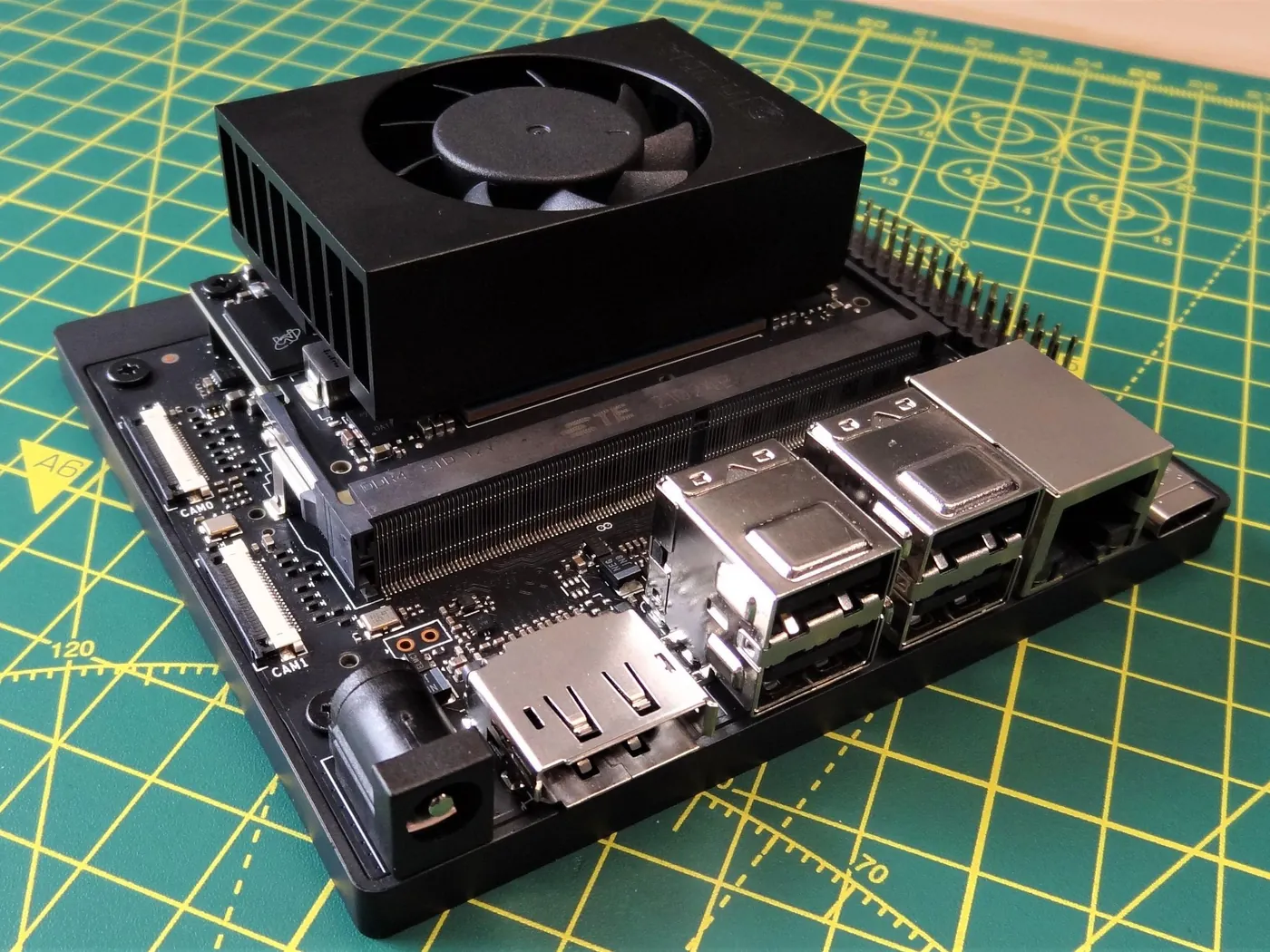
Photograph of the developer kit on our bench. In developmentJetson Orin Nano edge box
An NVIDIA Jetson Orin Nano developer kit, intended to run small models on site. It is development hardware, and it does not host the office workspace.

Concept render. Accessory fit to be verified. Design conceptBullNet Edge printed enclosure
An enclosure we are designing to 3D print for the edge unit, with a top fan and an open port bay. The camera and voice add-ons shown are concepts.

Illustrative render. Not a photograph of the unit. In developmentZimaCube Pro business cube
A six-bay ZimaCube Pro, being configured with a 24GB NVIDIA professional graphics card. The card and its fit, power and drivers in this chassis are being validated.
- In development
ZimaBoard 2 compact server
A single-board server with drives attached and a low-profile NVIDIA graphics card, being validated for documents, light agents and small models.
- In development
ZimaBoard 2 with a full-size graphics card
The same compact board with an RTX 5080 on separate power. Slot bandwidth, power delivery, cooling, driver and operating system are being validated.
“In development” means we are building and testing it. It is not yet documented as in operation, and it is not a customer deployment. Renders are captioned as renders.
Solutions we configure to suit
Four example configurations. None is a finished or certified product.
A compact on-site unit for a small team.
- What it does
- Light local services, approved agents and connectivity.
- Who needs it
- A small contractor or office that wants its documents and light AI work on its own premises.
- Designed to run locally
- Document search, small models and light agents.
- Needs more compute
- Larger models and heavy document processing.
- BullNet manages
- Setup, updates, monitoring and agent configuration.
- Stays with you
- Physical security, power, internet and user approvals.
- Jetson Orin Nano edge boxIn development
- BullNet Edge printed enclosureDesign concept
- ZimaBoard 2 compact serverIn development
No prices, performance figures, certifications or availability dates are stated. Each configuration is specified and tested for the customer before it is relied on. Product names belong to their makers.
03 What it does
Five jobs, in plain terms.
- What it means
- Supported AI work runs on equipment inside your building.
- Why it matters
- Sensitive documents do not have to leave your premises to be useful.
- Example
- Searching project files and drafting a summary on site.
- What you approve
- Which jobs may run locally, set on the Flight Sheet.
Design concept of the layers inside a Node. What a given unit can run depends on its hardware.
04 See it work
A project document arrives.
The electrical contractor from our example is managing drawings, submittals, requests for information, supplier documents and deadlines on a 600-unit project. This is how a Node is meant to help.
- 01
Files are added
Approved project files are added to the local document library.
- 02
The Node processes them
The Node processes supported content and makes it searchable.
- 03
A question is asked
A project manager asks a question through the private AI office.
- 04
An answer is prepared
The system prepares an answer with document references and identified exceptions.
- 05
A person reviews
A person reviews the findings before acting.
At step three the project manager might ask: “Which electrical submittals are outstanding, and what changed in the latest drawing revision?”
Illustrative demonstration Illustrative workflow; actual functionality depends on the configured and verified system. Comparing documents does not replace engineering review.
05 Where the work runs
On site, hosted, or both.
- Runs on
- BullNet Node
- Hardware
- On your premises
- Data at rest
- Stays on site
- Connectivity
- Outbound connections only as agreed
- Agreed in writing
- Physical access, maintenance visits, update process
BullNet Infrastructure / the utility
Not a hyperscaler. A specialized intelligence operation.
Private compute BullNet owns and operates, for the jobs an on-site Node cannot carry. Existing infrastructure
- A
Physical compute - B
Local model inference - C
Domain-specific intelligence - D
Authorized agent execution - E
Mathematical validation - F
Auditable work product
Owning compute is not a security certification. Not every deployment is isolated or offline, and a connected job is not automatically private. Availability depends on the redundancy, monitoring and support agreed for each engagement.
06 Your control
Owning the box is not the control. The rules are.
Custody
Where your information is stored, and for how long, is written down before work starts.
Authorization
Nothing connects out of your building unless you have approved that connection.
Access
Who can see which documents and ask which agents is set per person.
Human approval
A person approves every consequential decision.
Proposed capability These are commitments set for each engagement. Each control is implemented and tested for a deployment before it is relied on. Having hardware on your premises does not by itself make a system private or compliant.
07 The BullNet connection
One part of the office, not the whole of it.
- The Node
- Where supported processing happens locally.
- The Private AI Office
- Where people work with approved agents, projects, documents, reports and decisions.
- BullNet Infrastructure
- Where authorized workloads get additional private computing power.
- The Swarm
- Specialized agents carrying out assigned work.
- The Hive
- Approved business knowledge and intelligence sources.
- Defendable
- Evaluation, source checking, calculation verification and exception reporting.
- The Flight Sheet
- What is authorized, what information can be used, where processing can occur and who approves the result.
Do you need a Node? Maybe not.
The Flight Sheet answers that before any equipment is ordered. We look at what you are trying to do, what information is involved and where it should run. Then we pencil it.
06 How it connects
One mandate.
A purpose-built intelligence system.
Think of it as an office. The Private AI Office is the premises. The Node is the power on site, and it is optional. BullNet Infrastructure is the utility behind it. The Swarm is the staff, the Hive is the files, the Vault is the locked room and the Flight Sheet is the work order. Select a component to see what enters it, what leaves it and where its trust boundary sits.
The Private AI Office
The premises
- Purpose
- The workspace where your people and your approved agents work together: channels for teams and projects, agents you can ask, requests, reviews and approvals in one place.
- Inputs
- Questions and requests from your team; approved Flight Sheets; output from the Swarm.
- Outputs
- Reviewable answers, drafts and reports, each waiting on the person who approves it.
- In the system
- The front door to everything else. People reach it from a desk or a phone. The Swarm works behind it, and Defendable checks the work before it is shown as finished.
- Trust boundary
- Designed as a separate workspace per client. Who can see each channel, agent and document is set per person.
The Swarm: select an agent
Each agent is a worker with a written mandate. None is a fiduciary, a licensed professional or an investment decision-maker. Mandates below are representative.
- Agent
- Industrial intelligence agent
- Role
- Assembles a factual profile of a warehouse or distribution asset.
- Authorized sources
- Hive property and market stores; licensed data
- Approved tools
- Retrieval, document parser
- Testable output
- Profile with a source reference on every field
- Escalates to a human on
- Conflicting sources on size, clear height or tenancy
- Not permitted
- External transfer, investment recommendations, any action outside the Flight Sheet
Example Fictional scenario
Growth changes everything.
Winning the job is one thing. Building the business to deliver it is another.

BullNet / Built-to-suit example
One project. A different-sized business.
01 The opportunity
An electrical contractor in Palm Beach County. Fifteen employees, five years in, working out of 2,000 square feet of industrial flex space. He has just been awarded the electrical work on a 600-unit development. It is the biggest job the company has ever been awarded.
02 The pressure
The job is awarded. Now the business has to deliver.
More people, three more trucks and more material than a 2,000 SF building was leased to hold.
Staffing
Ten electricians and a project manager, hired and onboarded fast.
Facilities
The 2,000 SF industrial flex space cannot hold the crews, trucks and material.
Vehicles
Three more trucks, bought or financed, insured and kept on the road.
Suppliers
Bigger orders, longer lead times, supplier credit and warranties to track.
Cash flow
Payroll and materials go out before progress payments come in.
The existing business
The residential customers who built the company still expect a call back.
03 The Flight Sheet
First question: does the growth pencil?
A 600-unit project is not automatically a profitable one. Before any technology is prescribed, BullNet sits down with the owner and writes a Growth Flight Sheet: what the project requires, what the business can support today, where the gaps are, and whether the timing works. The office is designed around the gaps.
The Flight Sheet works from the contractor’s own documents and numbers. It is decision support, reviewed by the owner and his advisers. It is not financial, legal or tax advice.
- What the project requires
- People, trucks, space, materials, insurance and working capital, on the developer’s schedule.
- What the business supports today
- Taken from the owner’s own records and numbers, not from assumptions.
- Where the gaps are
- The list the office is designed around. No gap, no desk.
- Does the timing pencil?
- Payroll, material deposits and supplier terms go out on one schedule. The developer’s payments come in on another, less retainage. The Flight Sheet lines the two up against available working capital, because a job can be profitable on paper and still run short of cash in the middle.
04 The office
Explore the office we’re building.
Seven desks, each supported by specialized agents, working as one office. Every desk shows the need, what the agent supports and what a person approves.
- The business need
- Ten electricians and a project manager
- What the agent supports
- Organizes applicants, credentials, interview schedules and onboarding checklists.
- What the human approves
- The owner and hiring manager approve every job offer.
01Hiring desk
- The business need
- Ten electricians and a project manager
- What the agent supports
- Organizes applicants, credentials, interview schedules and onboarding checklists.
- What the human approves
- The owner and hiring manager approve every job offer.
02Project desk
- The business need
- Run the 600-unit job without losing the thread
- What the agent supports
- Keeps submittals, requests for information, change orders, material takeoffs and the schedule in one place, and flags what is late.
- What the human approves
- The project manager approves anything that goes to the developer.
03Fleet desk
- The business need
- Three more trucks
- What the agent supports
- Lays out the purchase math from the owner’s own numbers: payment, coverage and how busy each truck has to be to pay for itself. Tracks registration, insurance and maintenance dates.
- What the human approves
- The owner approves the purchase and signs for it. A lender sets the terms. BullNet is not a lender.
04Facilities desk
- The business need
- More room than the 2,000 SF flex space
- What the agent supports
- Turns headcount, trucks and inventory into a space requirement, and compares the cost of staying against moving.
- What the human approves
- The owner approves the building and the lease. A licensed broker handles the lease. BullNet does not.
05Operations desk
- The business need
- The front desk, suppliers and warranties
- What the agent supports
- Routes calls and web requests, keeps the schedule, and tracks supplier quotes, lead times and warranty dates.
- What the human approves
- The owner approves purchase orders and warranty commitments. Staff take anything the desk hands off.
06Finance desk
- The business need
- More risk on the books
- What the agent supports
- Tracks insurance certificates, bonding, licence renewals and contract deadlines, and prepares progress billing and lien waiver paperwork for review. Figures come from source records and are recomputed by code.
- What the human approves
- The owner approves what is filed and sent, after his accountant, insurer and attorney have reviewed it.
07Residential desk
- The business need
- Keep the customers who built the company
- What the agent supports
- Follows up on estimates, asks finished customers for reviews, and drafts local marketing for the service area.
- What the human approves
- The owner approves what goes out under the company name.
- town-square
- hiring-desk
- project-desk
- fleet-desk
- finance-desk
- flight-sheets
Owner
What do we need to get the 600-unit job staffed?
Hiring desk Agent
- From the approved Flight Sheet: ten electricians and one project manager.
- Candidate tracking is set up, with applicants, licences and interview times in one list.
- Draft job postings are ready for your review. Nothing is posted until you approve it.
Waiting on: owner approval of the draft postings
One approved project record. Specialized agents. Connected workflows. Human authority.
Proposed system architecture. It describes how the office is designed to work, not a production integration.
People stay in control.
Hiring, spending, commitments and execution stay with people. Agents organize, track, draft and flag. A person decides, signs and sends.
Where it runs.
The office runs on private compute that BullNet hosts and operates. If he wants the work on site, a BullNet Node in his own building is an option, not a requirement.
It changes when he does.
BullNet designs the office, operates it, and adjusts it as the job and the business change. One desk at a time, beside the way he already works.
One business. Multiple challenges. One private AI office.
Fictional scenario This company is made up. It is not a client, and no results are claimed. Desks and capabilities are illustrative. Agents do not perform licensed professional services or commit the company to anything.
Your next move starts with a Flight Sheet.
Tell us what your business is working through. The people, the equipment, the facilities, the information, and the decisions. We’ll define the assignment, examine what pencils, and determine whether a private AI office makes sense.
Examples Two more illustrative builds
Same office.
Different business.
Every build starts with a business problem, not a hardware specification.
- The problem
- Several warehouse properties, and years of leases, operating statements and loan documents spread across folders and inboxes.
- What the office does
- The office organizes the approved records, abstracts each lease, answers document questions with a page reference, and flags expirations and other risks to review. Net operating income is recomputed by code, not taken from a model.
- The boundary
- The output is only as good as the sourced documents and the assumptions the owner approves.
- Final approval
- The owner decides what to buy, sell, renew or refinance.
- The problem
- A temperature-controlled warehouse, and no clear view across equipment maintenance, operating records and risk.
- What the office does
- Approved maintenance logs and operating records feed local analysis on site, an exceptions report and a review queue for the people who run the plant.
- The boundary
- No live sensor integration and no predictive accuracy is claimed. Those are built and tested per facility before anyone relies on them.
- Final approval
- The operator decides on repairs, spend and priorities.
Illustrative scenario These companies are made up. They are not clients, and no results are claimed.
07 The founder
Built in the trenches.
Engineered for what comes next.
Reserved for an authorized image
Day one was a desk and a phone. Thirty years later, that experience is what the agents are built on.
BullNet's founder spent approximately 30 years as a commercial real estate broker, in the middle between buyers and sellers. By his own count that was about 200 dials a day. It added up to approximately $8 billion in closed transactions, national-level work in industrial property and capital markets, and leadership of a national industrial team.
BullNet is not in the bricks-and-mortar business. It is a service provider in the middle again, this time between a company and the AI it needs. The founder designs and operates the systems directly: the compute, the local models, the datasets and the tests. The transaction experience decides which questions the agents ask and which answers the tests refuse.
Career figures are approximate, describe the founder's prior brokerage career and are not independently audited. BullNet itself does not broker property.
08 The Flight Sheet
Every mission begins
with a Flight Sheet.
The Flight Sheet defines the mandate before work starts and holds the evidence when it ends. On the left is an illustrative completed sheet. On the right you can draft your own request.
- Client
- Example Distribution Co. (fictional)
- Objective
- Test a direct-capitalization value for a 250,000 SF distribution building ahead of a purchase decision.
- Classification
- Confidential, client-owned
- Permitted data
- Client rent roll and trailing-12 statement; licensed market data; no external transfer
- Agents
- Lease abstraction, Underwriting, Mathematical validator
- Calculations
- NOI reconciliation, direct cap value, cap-rate sensitivity at 50 basis points either side
- Human review
- Assumption sign-off before run; exception review after validation
- Acceptance
- Every deterministic test passes and every figure traces to a source version
- Validation
- FAILED on DEF-CAP-001
| Scenario | Cap rate | Recomputed value |
|---|---|---|
| Cap rate 50 bps lower | 5.50% | $32,727,272.73 |
| Base case | 6.00% | $30,000,000.00 |
| Cap rate 50 bps higher | 6.50% | $27,692,307.69 |
Sensitivity recalculates from the validator inputs in section 12. No figure here is a real property, client or transaction.
09 Services
Customization by design.
An agent is built like a single-tenant building: one need, one occupant, built to suit. A business has many needs, so it gets many agents. Our job is to build them, fit them in, and then manage, fix and adjust them as the business changes. We go one win at a time, beside the way you already work. Nothing you rely on is replaced on day one. Scope, timing and fees are set in the engagement agreement.
- S-01
Custom builds
Agents built for your work. Back office: documents, data entry, billing support and reporting. Front end: the questions and requests your own customers bring.
- S-02
Infrastructure management
We run what we build: the compute, the models and the updates. When something breaks or the business changes, we fix it or adjust it.
- S-03
Data organization
Leases, titles, logs, contracts and financials brought into one private store, with a record of where each figure came from.
- S-04
Hardware and equipment acquisition
We pencil the purchase, set out procurement terms and outcomes, and introduce lenders where they fit. Hive Capital Markets
The build ladder
The model is off the shelf. The agent is built to suit. We use the lowest rung that does the job, and the Flight Sheet records which one and why.
Script
Plain code, no AI model. Calculations, scheduled reports, file handling and checks. Code does the math.
Configured agent
A proven open model given one job, the tools it may use and the limits it must keep.
Grounded agent
The same agent, answering from your approved documents and data.
Fine-tuned agent
A model trained further on approved data. Used only where the lower rungs test short.
How a build runs
Design
Define the job, the measurable win, the data boundary and the tests.
Build
Assemble scripts, agents and data, and install them in the agreed environment.
Validate
Run deterministic tests, reconcile sources, record exceptions.
Shadow
Run beside your current process. Output is reviewed, not used, until it passes.
Operate
Go live on your sign-off. Then maintain, monitor and extend.
Engagement lifecycle
- What happens
- A conversation about the mandate, the data and the constraints.
- You provide
- A general description of the problem. No confidential documents.
- BullNet delivers
- A written summary of fit and open questions.
Go deeper The technical layer
How the controls work.
Everything above is the overview. Below is the detail for the people who will check it: the Vault, Sovereign ID, Defendable and the practice areas. Each part is labelled with what exists today and what is proposed.
10 The Vault
The NDA is not a suggestion.
The Vault is a proposed policy and authorization framework that governs how confidential client information is processed. Follow one confidential asset evaluation through it.
The NDA and engagement agreement are recorded on the Flight Sheet. The data has not moved. It is still with the client.
What you signed
The NDA and engagement agreement state obligations. They create duties. They do not, by themselves, stop a file from moving.
What the system enforces
Classification, role and attribute permissions, restricted agent access, transfer controls, key management, retention, deletion and access logging.
Who holds the data
Set per engagement and written into the custody and processing model. The Vault is not a regulated escrow service.
Proposed capability Controls shown here are a design framework. Each one is confirmed, implemented and tested per deployment before it is relied on.
11 Sovereign ID
Globally identifiable.
Locally executed.
Every device, agent and work product can carry a cryptographic identity. BullNet intends to explore ENS names as optional public anchors for that hierarchy. Confidential identifiers and deal data stay private.
- Example
bullnet-example.eth
Hypothetical. No name ownership or resolver configuration is claimed.- Holds
- Root keys and the registry of issued credentials.
- Proves
- A record was issued under BullNet’s root.
- Does not prove
- That any device or agent beneath it is currently trustworthy.
Sample signed Flight Sheet receipt
This receipt reflects the validator inputs in section 12. The SHA-256 digest is computed in your browser from the payload shown. No signing key exists in this page, so no signature is produced.
FLIGHT SHEET EVIDENCE RECEIPT

{
 "flight_sheet": "FS-DEMO-0001",
 "issuer": "bullnet-example.eth",
 "node": "node-01.bullnet-example.eth",
 "agent": "validator.node-01.bullnet-example.eth",
 "mandate": "direct-cap valuation check",
 "test": "DEF-CAP-001",
 "inputs": {
  "noi_usd": 1800000,
  "cap_rate_pct": 6
 },
 "submitted_value_usd": 33000000,
 "recomputed_value_usd": 30000000,
 "result": "FAILED"
}

sha256    computing
signature none (no signing key in this page)
published no (private by default)- ENS is a naming and discovery layer. It is not an access-control system.
- Owning a name does not prove device integrity, human authority, confidentiality or agent reliability.
- Public chain publication is optional per workflow. Client transaction details are never written to a public chain.
12 Defendable / Validate the validator
If the math fails,
the answer fails.
The model is not the authority. The evidence is. An agent has submitted a direct-capitalization value for a hypothetical industrial property. Change any input and the check below recomputes it independently in your browser.
[1] inputs present and positive ... PASS
[2] units and scale ............... PASS
[3] recompute NOI / cap rate ...... $1,800,000.00 / 6.00% = $30,000,000.00
[4] compare with submitted ........ FAIL  $33,000,000.00 vs $30,000,000.00
    difference .................... +$3,000,000.00 (+10.00%)
[5] cap rate implied by submitted . 5.4545%Exception recorded. The agent submitted $33,000,000.00. Test DEF-CAP-001 recomputed $30,000,000.00 from NOI of $1,800,000.00 at a 6.00% cap rate. The submitted figure implies a 5.4545% cap rate, which no approved assumption supports. Corrected value: $30,000,000.00. Assumptions: direct capitalization, inputs as stated, no adjustments.
This test proves the arithmetic. It does not prove that the NOI is right or that the cap rate suits the asset. Those are evidence and judgment questions, and they carry a different status.
Illustrative demonstration This is a browser-side example of the method. It is not a deployed model evaluator and no AI model is running on this page.
13 Industry expertise
Five practices.
One operating discipline.
Industrial
Warehouse and distribution assets, underwritten the way a buyer’s committee will question them.
- Industrial acquisition underwriting
- Warehouse and distribution intelligence
- Leasing and occupancy analysis
- Property operating assumptions
- Industrial market research
- Transaction diligence
- Portfolio analysis
14 Questions
Straight answers.
What BullNet is, who it is for and how it works, in plain terms.
What is BullNet?
BullNet builds private AI offices to suit. It custom-builds AI agents for small and mid-size companies that run on real estate and equipment, such as warehouse operators, contractors and distributors, then manages the infrastructure, organizes the data and works out the math on equipment purchases. It runs on bare-metal compute the founder owns and operates, and it is built on the founder’s approximately 30 years as a commercial real estate broker.
What is a private AI office?
A private AI office gives one company’s team a single place to work with the AI agents built for that business. People ask questions, organize projects, prepare reports and review the work there. Each agent has a defined responsibility and access only to information the company authorizes. There is no standard list of agents: each office is designed around the business. BullNet builds it, connects the computing it needs, and stays to operate and improve it. The agents do the legwork, and people make the decisions.
What is the BullNet Node?
The BullNet Node is a private AI computer that sits inside a client’s business. It runs approved models and agents on the client’s information, on site, and connects to BullNet only when the client authorizes it. The Node is optional: an office can also run on BullNet Infrastructure, the private compute BullNet owns and operates. The Node is not a fixed product. It is a deployment configuration designed around the business. BullNet is developing and testing Node hardware; a customer’s Node is built to suit and tested before it is relied on. No prices or performance figures are published.
Will a private AI office disrupt how my business runs today?
It is designed not to. BullNet works one job at a time. Each build first runs in shadow, beside the current process, where its output is reviewed but not used. It goes live only after it passes its tests and a named person at the company signs off. Nothing the business relies on is replaced on day one.
Does BullNet build its own AI models?
Usually not, and it does not need to. The model is off the shelf and the agent is built to suit. BullNet uses the lowest of four rungs that does the job: a plain script with no AI model, a configured agent on a proven open model, a grounded agent that answers from the client’s approved documents, or a fine-tuned model trained further on approved data. Fine-tuning is used only where the lower rungs test short.
Who does BullNet serve?
BullNet serves small and mid-size companies that operate inside real estate and rely on equipment: warehouse and distribution operators, contractors, logistics and cold storage companies. It also works with property owners, family offices and private capital groups. It is not a product for retail investors.
Why are BullNet’s AI agents custom-built?
The general models are strong. What a business is missing is the fit. BullNet starts from strong models and builds each agent for one need, the way a single-tenant building is built for one occupant, and a business with many needs gets many agents. Each is tuned to the client’s work and data, fitted into existing systems, and then managed, fixed and adjusted over time. A person approves every consequential decision.
What would BullNet build for a growing contractor?
As an illustration: an electrical contractor with 15 employees wins a large new construction job and needs more crew, trucks, space and office staff. BullNet would build one agent per need, such as a hiring desk, a project agent for submittals and change orders, a front desk agent, a supply and warranty agent and a compliance agent, and would pencil the truck purchases. A person at the company approves every consequential decision.
Is BullNet a commercial real estate brokerage?
No. BullNet does not list, market or sell property, and it does not act as an agent in property transactions. It is also not a lender, a fund, a securities placement agent or an investment adviser. BullNet provides analytical infrastructure and decision support, and clients keep authority over their information and their decisions.
How is BullNet different from ChatGPT or another general AI assistant?
A general assistant is one shared model that answers any question. BullNet builds a system for one client and one mandate. Its agents work under written mandates, only on data the client has authorized, in an environment the client approves. Numeric outputs are recomputed by deterministic tests, and judgment calls go to a qualified person.
Where does my data go, and does everything run locally?
That is agreed in writing for each job. Work can run on a BullNet Node inside the client’s business, on BullNet Infrastructure that BullNet owns and operates under a written custody and processing model, or split between the two. Not every deployment is offline, and a connected job is not automatically private: what may leave the client’s environment is listed and approved before the work starts.
What is a Flight Sheet?
A Flight Sheet is BullNet’s standard work specification and evidence package. Before work starts it fixes the objective, scope, permitted data, required calculations, tests and human review points. When work ends it holds the inputs, source versions, validation outcomes, exceptions and reviewer decisions.
How does BullNet check that an AI answer is correct?
BullNet never treats model confidence as proof. Its evaluation layer, called Defendable, recomputes calculations independently, reconciles claims against source documents and routes judgment calls to a person. Every claim gets one of five statuses: mathematically verified, evidence supported, inconclusive, failed, or requires human review.
What kinds of commercial real estate work does BullNet support?
BullNet has five practice areas: industrial, cold chain, logistics and last mile, capital markets, and family office systems. Typical work includes acquisition underwriting, lease abstraction, cap-rate and discounted cash flow analysis, debt and equity sensitivities, due diligence support and investment committee preparation.
What is Hive Capital Markets?
Hive Capital Markets is the capital desk of BullNet. It works out the acquisition math for equipment, trucks, machinery, GPU infrastructure and commercial real estate: payment, coverage, break-even utilization and the scenarios that break a deal. It prepares lender-ready packages and can introduce clients to lenders. BullNet is not a lender, and any financing comes from third-party lenders on their own terms. A lender may pay BullNet a fee when a financing closes, and BullNet tells the client when that applies.
Does BullNet use blockchain or sell tokens?
BullNet does not sell tokens or tokenized investments. It is exploring ENS names as optional public identity anchors for devices and agents, used for authentication only. ENS is not an access-control system, and client transaction details are never written to a public chain.
How do I start working with BullNet?
Start with a Flight Sheet request on bullnet.ai, or email [email protected] or call 561.532.7120. Describe the problem in general terms. Confidential documents are exchanged only after an agreement and an approved channel are in place.
15 Begin
Your next move deserves its own AI office.
Start with a Flight Sheet. It costs a few minutes and commits neither side to anything beyond a first conversation.
- Email [email protected]
- Phone 561.532.7120
- X @bullnetai
30 years in the trenches. Built for the agent economy.